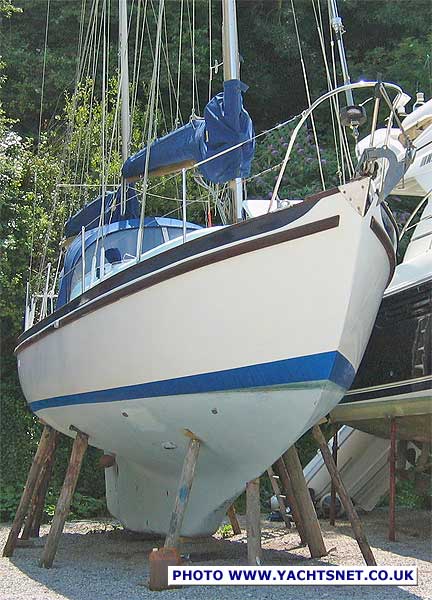
The yacht illustrated here was the first of about
20 Deep Seadogs to be built,
out of the total production of around
140 boats, mostly triple-keel versions. |
|
|
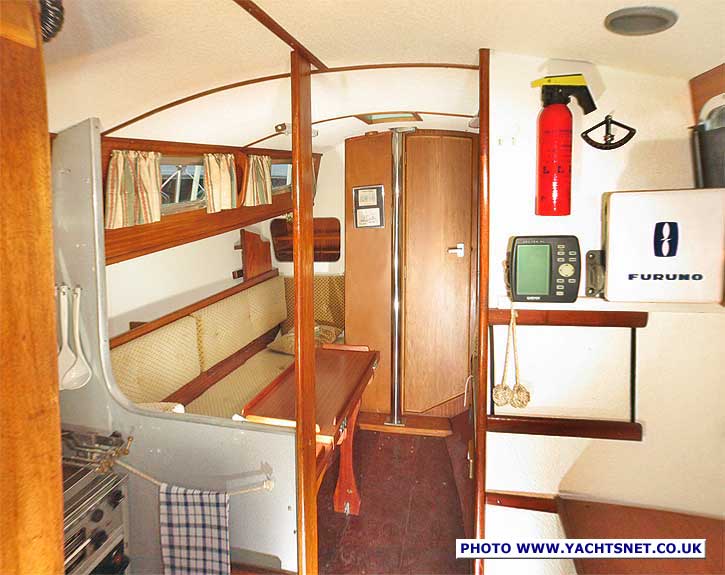
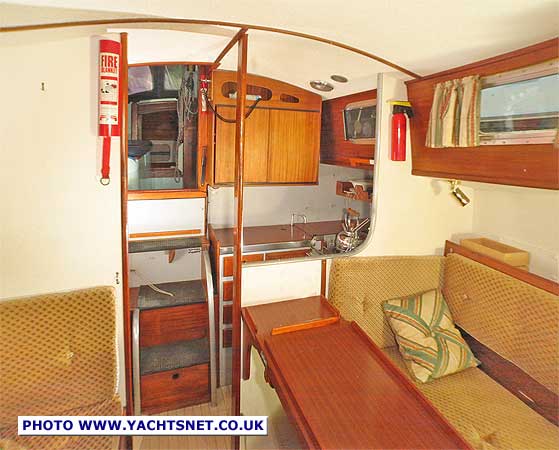
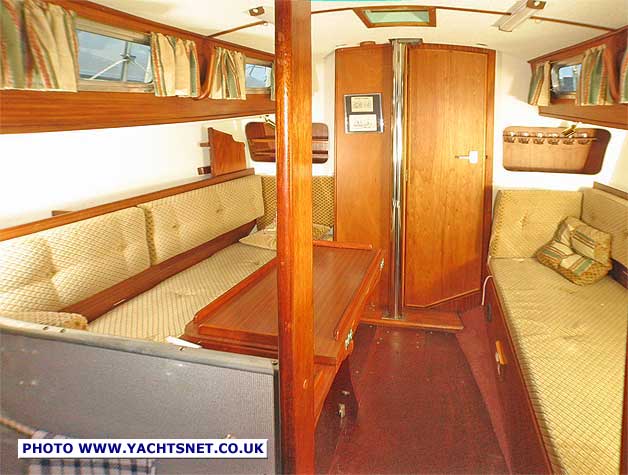
Above and right: The saloon has galley to port, and a chart
table to starboard, with the seating area forward. The saloon
table folds away almost completely, to leave a very open interior
when the table is not required (photos show the table with one
leaf only open).
|
|
|
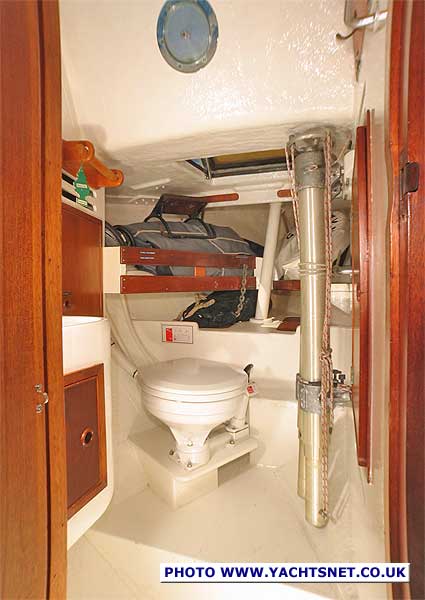
The Seadogs have no berths in the
fo'csle, this being used for a large heads compartment with basin
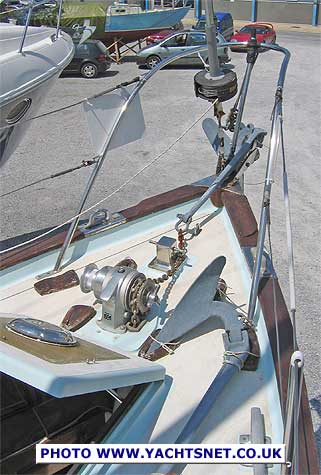
and WC, plus stowage. In this yacht the collapsible aluminium beaching
legs are stowed here when not in use, on a similar fitting to the
one on deck. |
Yachts
seen here are no longer for sale - the data is online as
a free information service for buyers researching boat types.
THE PHOTOGRAPHS ARE COVERED BY COPYRIGHT, AND MAY NOT BE
REPRODUCED WITHOUT THE PERMISSION OF YACHTSNET LTD.
Go to our brokerage
section for boats currently for sale |
|
|
|
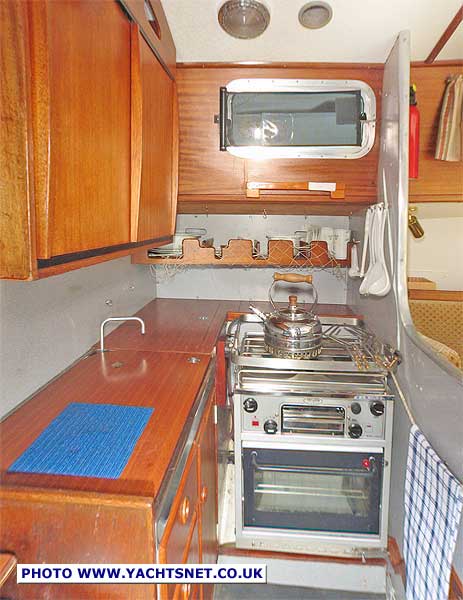
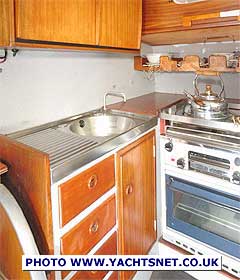
The galley has a gimballed cooker, and a large sink/drainer,
plus stowage.
|
|
|
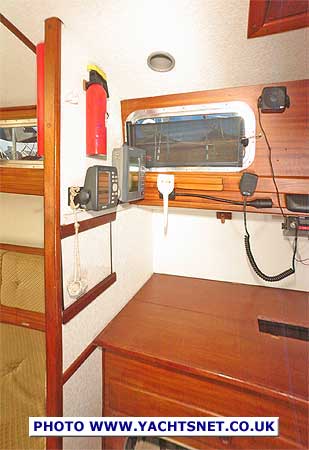
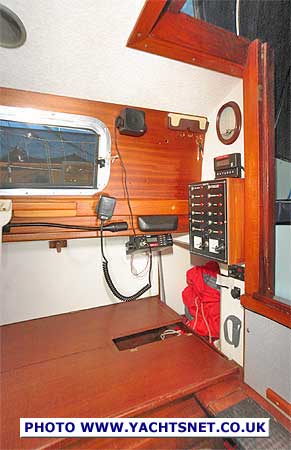
The chart table is designed so that the top folds away, to allow
the space under to form the head of a quarter berth. In practice
this berth is small and awkward to get in and out of, and few
Seadog owners use it as a berth, although the foot of the berth
offers good stowage
|
|
|
|
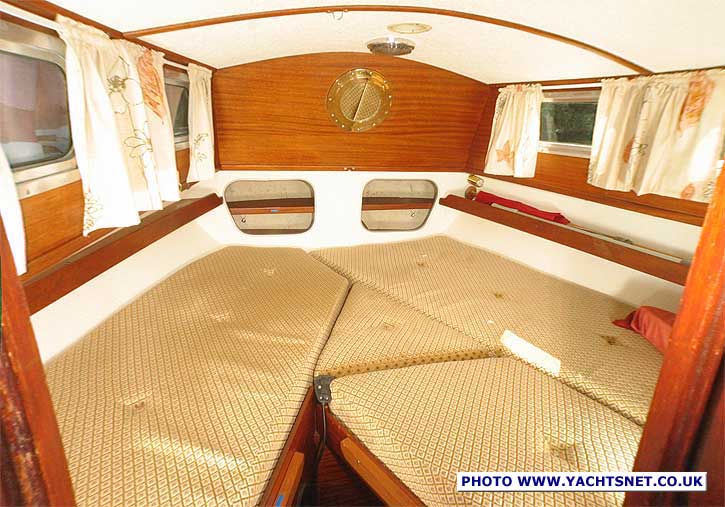
As in most Seadogs, the original two separate berths on either
side have been modified to create a
double berth on one side, at the expense of foot room in the cabin |
|
The Perkins 4107 was the usual engine fitted to
Seadogs, and most are still running despite their age. Engine access
is by removing the cockpit sole panels - just one panel is open
here.
|
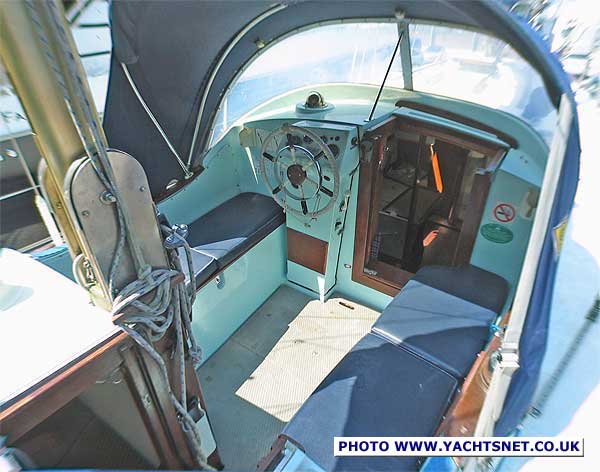
The deep self-draining cockpit is well protected behind a fixed
windshield, over which a sprayhood is fitted. Many Seadogs also
have a full 'camper' cover for the cockpit
|
 |
|
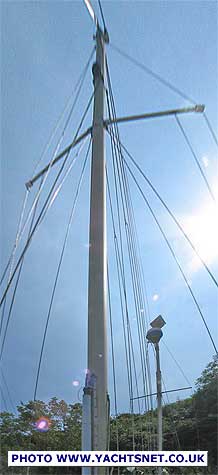
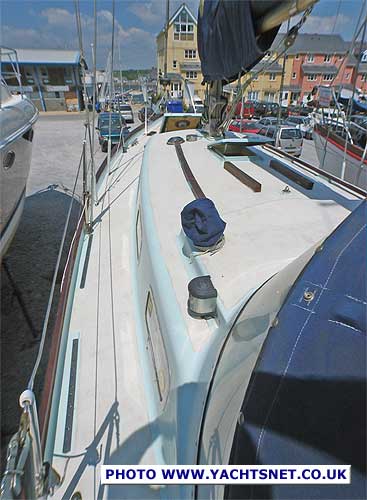
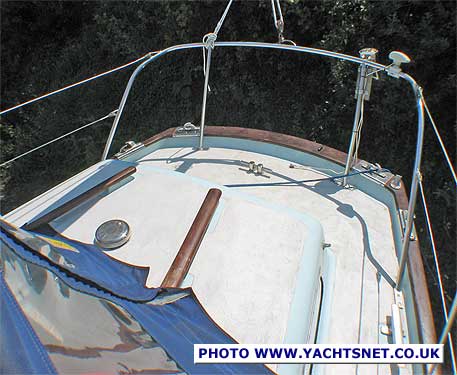
Both masts are mounted in tabernacles, to allow lowering without
a crane
|
 |
Yachts
seen here are no longer for sale - the data is online as a
free information service for buyers researching boat types.
THE PHOTOGRAPHS ARE COVERED BY COPYRIGHT, AND MAY NOT BE REPRODUCED
WITHOUT THE PERMISSION OF YACHTSNET LTD.
Go to our brokerage
section for boats currently for sale |
|
|